Category Archives: Food

Hiding from the storm

Living in the Pacific Northwest means mild winters, not too hot and humid summers, pleasant springs that mean short sleeves in February sometimes, and ALWAYS rain once October hits. Last Sunday was no exception. The last day of September, perhaps the last weekend to hold onto any hope of an extended Indian Summer, and the first heavy rainstorm of the year. The morning started out mild enough, cloudy but not too bad, and I decided it was time to bring out the ladder and harvest the apples from our two trees. With the rainy spring we had, germination had been poor, so there was nowhere near the volume of last year’s bumper crop (200 lb), but I still managed to take about 25 lb of decent apples off of the trees, with a comparable amount of cracked and scruffy ones left for the birds, the squirrels and the compost.

One look at the pool proved the day had come that I dread all year: For some reason, (in all likelihood the same fleeting hope) I always insist on waiting until it’s been three weeks since the last swim, and the temperature has plummeted to single digit temperatures (Celsius) before deciding it’s time to winterize the pool. This means, among other things, a trip inside the frigid water to remove the stairs and a thorough scrub of the walls. Sensing the impending black clouds rolling in and knowing that the task wouldn’t be any more pleasant with rain pelting down as I struggled to pass the awkward stairs up to the rest of my clan, I dove in, and tried to make as hasty a retreat as possible.

Thoroughly chilled to a temperature fit for a white wine, I hopped into the hot shower and began to think about dinner. First something warm for a snack with a coffee, and since I’d been promising that with my newfound schedule of being home more would translate into more baking, decided on some pecan sticky buns. As I do with most things, I consulted a few well respected texts, examined the common traits to the recipes and then made a recipe using the recurring themes and ratios.
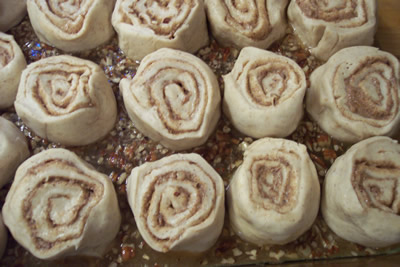
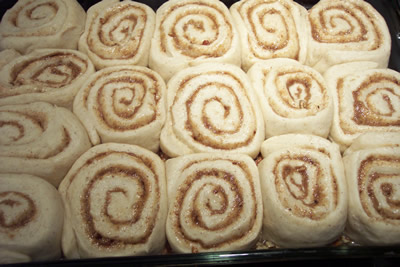
Out came the Kitchen Aid, a nice soft egg and butter dough was prepared and set to rest, covered gently. The glaze was quickly boiled together using half honey and half maple syrup, as I didn’t have a great deal of either, and poured into a large pyrex pan. I had just over a cup of pecans in stock, so they were lightly toasted, chopped, and 2/3 used for a scatter on top of the glaze, the remainder set aside for the filling, creamed quickly with butter, sugar, and cinnamon. I rolled the dough out into a large rectangle, spread the filling, and sliced into thick slices which were then arranged nicely onto the glaze. I wrapped the project up and left it to rise, and headed out into the rain to scour for the rest of the dinner.
Being a week before Thanksgiving, I came across a nice half ham and decided that would be fitting for such a miserable day, and provide for ham and eggs on Monday, sandwiches for the rest of the week, and maybe a soup the following. What else, but candied yams to accompany, and I figured I’d make baked potatoes as well. A few beans that were looking decent at the market were procured, and since the morning’s harvest had yielded a bushel of fruit, a deep dish apple pie for dessert.
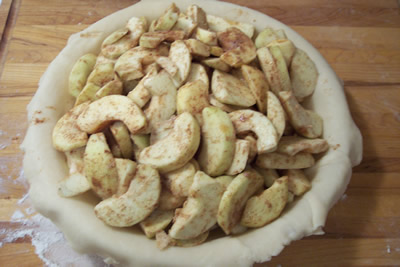
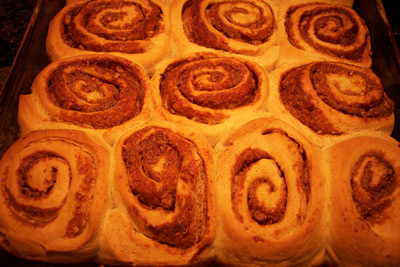
Back at home, fresh coffee in hand, the buns were ready for the oven, so in they went, giving me a bit over a half hour to make the pie. My favourite traditional pie crust (made with lard) was assembled, a few pounds of the apples selected, peeled, and sliced, and a double crust pie came together rather quickly. By this time, the aroma of yeast, nuts, butter, and several different sweeteners was filling the kitchen, and the pie graciously traded places with the sticky buns in the oven. One always has to remember that no matter how much the temptation, the glaze on the bottom of the bun pan is an extremely hot and volatile mix of sugar and other deliciousness, and must be allowed to settle for a few minutes before inverting them onto a tray to be torn apart and devoured quickly.
The coffee and buns having done the trick and restored regular body temperature, I prepared the sweet potatoes, pricking them with a paring knife and settling the tray in the oven to bake. About an hour, until they are soft and little bubbles of caramel are oozing from the knife wounds should suffice, to be scooped out (it’s actually more like squeezed out) and mashed with brown butter and nutmeg. The ham was lightly scored on top, and a quick glaze prepared, basically something slightly acidic (I had white wine sitting there), something sweet (honey in my case) and a bit of mustard. It makes a rather thin glaze, which is nice, as it then coats the ham as it bakes with a thin veneer of sweet and spice.
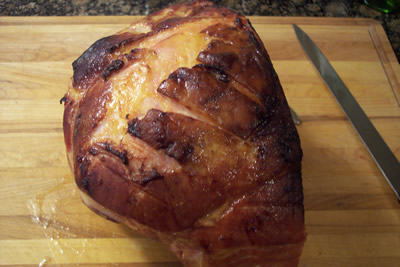
Once the pie was out, the ham again filled the void in the oven and set out on its journey from the ordinary to the sublime. I usually will give it an hour before the glaze starts to go on, to prevent it getting too dark, and then apply it in thin coats every 15 minutes, until it’s gone. The whole process usually takes a couple of hours, and then once it’s had a good half hour rest, thin slices across the grain are enough to satisfy completely.
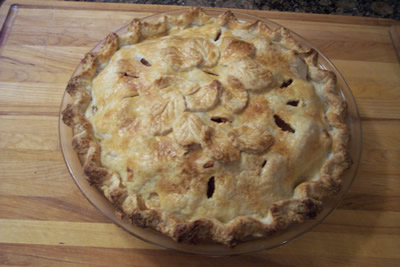
Duly satisfied, at least an hour was required before tucking into the pie, and more than worth the wait. The sound of the rain pounding on the back porch, warm cinnamon and soft fruit in the mouth, it doesn’t seem to matter that it’s half a year before the start of another spring and summer.
Tradition!

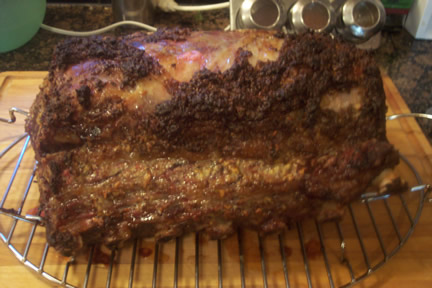
For many of us, the ultimate Sunday Dinner had to always be roast beef and Yorkshire pudding. Not that it happened every week, but when it did, it always meant a really satisfying meal. My Mother in law’s birthday is this week, so we decided to have the family over for Sunday Dinner. What else to make for the older generation but roast beef, and if you want to really see a group of septuagenarians get excited, roast a prime rib! A birthday cake was also in order, so I settled on making a chocolate cake of some sort, and figured I’d give it some thought.

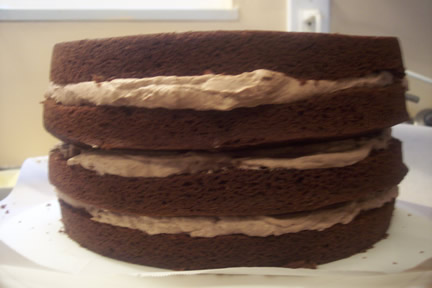
We toddled off to market, picked up a few carrots and parsnips (my wife’s favourite easy vegetable, mashed together), settled on mashed potatoes (what else?) , and picked up a hefty 13 pound rib of beef at the butcher. Back to the house, and a serious cake project was underway. I had prepared the layers the night before, so that they would be easy to handle, and cut them crosswise into two. I whipped up some cream with cocoa and icing sugar, and layered it in between, placing the cake back into the fridge to cool. (It’s important to note, that for a nice even top, invert the layers so that the piece on top is the base of one of the layers, with nice flat surface to work on.)

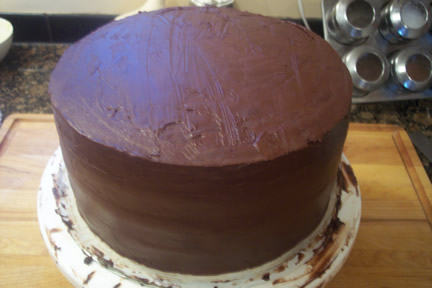
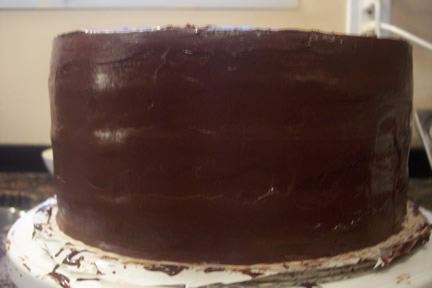
Preparing a cake to be glazed with ganache involves some serious engineering and sculpture, so I prepared the ganache with 70% dark chocolate (being very careful not to stir it too much for fear of making it volatile and seizing it) and an equal amount of cream, setting it aside once melted and mixed well. I removed a third for my base coats, so that I could spread it on without getting crumb into the rest of it. A trim of the filled layers to provide straight, even edges, and I took a small palette knife, and spread a thin layer of chocolate all over the cake, to create a seal. Back into the fridge to set.

Once firm, another thin coat, this time trying to even out any irregularities in the sides. Fridge again.

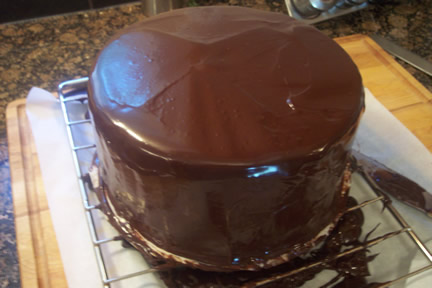
Half an hour later, another thin coat, and this time it’s looking quite nicely shaped, and should provide a nice smooth base for coating. After being cooled and the remaining ganache heated up again over hot water, I was ready to glaze. I carefully transferred the cake to a wire rack over a pan lined with parchment, to allow the excess to drip off the edge rather than pool at the base. The remaining ganache was poured over and with a minimal amount of coaxing from my spatula, allowed to gently flow over the top and down the sides.

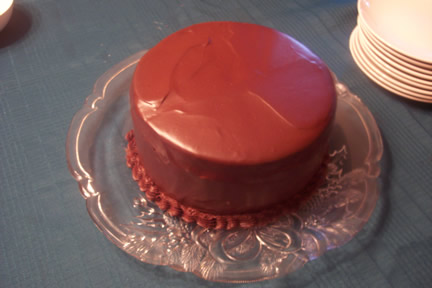
This is where the preparation comes in to play. The chilled structure underneath allows the ganache to cool and coat evenly as it flows, creating a picture perfect top coat that will remain shiny and smooth once set.I lifted the rack off of the tray, put it onto another, and set it in the fridge. The excess ganache was scooped up and placed in a piping bag with a small star tip to decorate the edges once the cake was moved onto its platter, and set aside to cool until the consistency of soft butter.

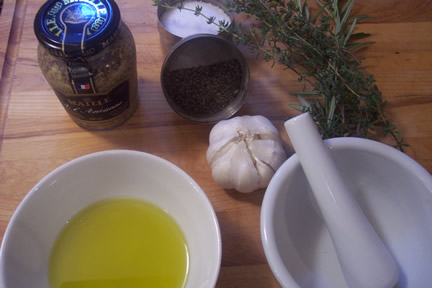
The cake under control, it was by now mid afternoon and time to think about the main course. I grabbed the required elements for a nice rub: a head of garlic, grainy Dijon, coarse salt, olive oil, pepper, and herbs from the garden. Out came the mortar and pestle, and into it placed the peeled garlic and a generous pinch of salt. I mashed it up a bit to break down the garlic into a coarse pulp, added a twist of pepper and the chopped herbs (thyme and rosemary), and a knob of grainy mustard the size of an egg. Again with the mortar and pestle, baptizing it with a generous dose of olive oil, until a reasonably fine paste had been achieved.

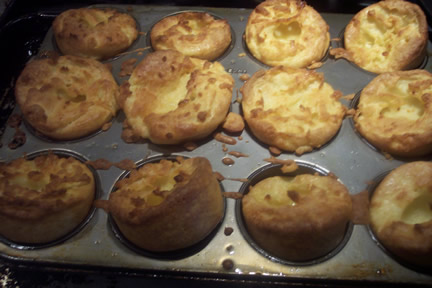
The rib was rubbed, place on a rack in a roasting pan and the oven prepared: 375 in the convection, (400 without) just for an hour to get nice colour, at which time the temp would be dropped by 50 degrees to allow a nice gentle roast for the remaining hour or so. I fixed the batter for the Yorkshires: the tried and true hotel banquet recipe; equal parts by weight flour, egg, milk. 250 grams of each yields a dozen, so I made enough for 24. (In volume measure it works out to 1 2/3 cups flour, 1 cup milk, and 4 eggs per, plus a nice pinch of salt)

That taken care of, I peeled the vegetables and potatoes, placed them in pots ready to go and did a bit of prep for the gravy. Whenever I cook a large roast or bird, I set a small pot aside for the carrot (and in this case parsnip) peelings, onion and garlic trim, bits of herb stems and celery tops, etc, and have that simmering on the back of the stove. If there are the odd bits of trim, even better, as the resulting quick stock provides a nice amount of flavour for making the gravy from the drippings. I tend to dice up a half an onion, a couple of stalks celery, and the ends of the carrots, parsnips, etc and transfer those to either around the roast without crowding it causing it to stem, or into an oven proof saute pan for a nice roast. Once the roast comes out of the oven, the rack is lifted, the vegetable if not already in there are added to the drippings and the whole mess is placed on a medium high burner (still in the roasting pan, of course) and caramelized gently. Enough flour is added to make a roux, usually 1/3-1/2 cup per litre of stock, and once a golden brown, the liquid can be added. I always start with a deglaze with wine, there’s usually something open by this point for dinner, so a splash into the pan. (the exception to the rule being if you’ve opened an ’82 Mouton for dinner, in which case open something else for the gravy) Strain out the quick stock you’ve made, and add it, bit by bit, stirring constantly until it’s well incorporated. I usually will just let it simmer gently in the roasting pan for a few minutes, to make sure I’ve adequately removed all bits of flavour from the bottom, before transferring it to a sauce pan over low for a simmer until the roast has rested completely. Just before serving, adjust the seasoning and strain.

Oven bumped up to 425, it’s time to get the puddings on the roll. My beaten and weathered muffin tins, who are being saved for this noble purpose, are placed on a baking sheet, the prescribed amount of oil added to each (2 Tbsp or so, about 1/8 inch) and the whole sheet placed in the hot oven fro 10 minutes. Yorkshire puddings rise by the action of the egg-rich batter hitting the hot oil, so this is VERY important. Once hot, a ladle of batter into each tin cup, back in the oven on upper rack, and door closed for 12-20 minutes, until puffed and golden. To prevent them from collapsing, it is important to reduce the oven temperature after 20 minutes (to 300), and prop the door ajar a few inches to allow excess steam to escape and the puddings to dry out. !5 minutes later, ready to go!!

A quick mash of potatoes and veg, roast carved and puddings transferred to a platter, the deafening silence of the family, punctuated by the occasional ping of cutlery vs plate registered success. Two helpings apiece, it took great strength to finish the slice of cake presented, but a valiant effort was made by all. And that’s what it’s all about: TRADITION.

Busy weekend, easy dinner

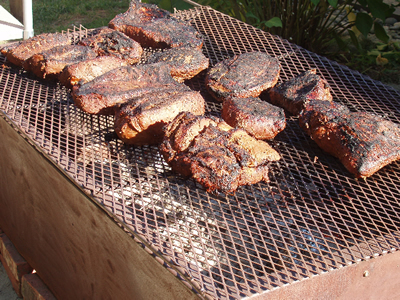
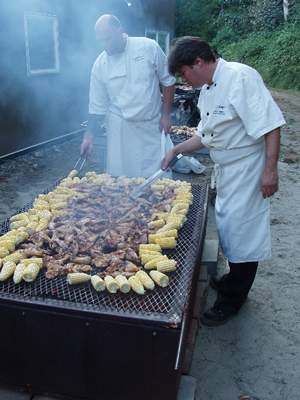
This weekend was quite busy, so Sunday dinner became a bit of an afterthought. Saturday I was out all day helping my friend and former sous chef Jeff van Geest cater a wedding for some dear friends of ours, Gary and Naty King from Hazelmere Organic Farms, whose eldest daughter (one of a set of twins, I might add) was getting married, with the reception being held at the family farm. I had gone out the day before for some advance preparation, and most of the food was being prepared and brought in from the restaurant, but an early day was still in order to prepare for the 180 guests. Jeff and I were out early, getting things organized, doing some of the final details, and conversing on the logistics of the afternoon. There was over 50 lb of bison that had been marinated and sent down from Fort St. John, 4 large spring salmon, and 50 chickens, which had been quartered. deboned, and marinated in an apricot five spice barbecue sauce that Jeff had made. 180 pounds of charcoal, 2 large barbecues, plus 2 gas grills were at the ready, so all was looking fine.

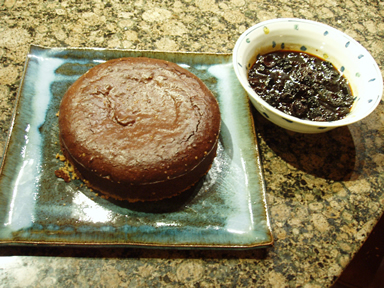
Around noon, the mother of the bride came into the kitchen with some troubling news: the pastry chef who had made the wedding cake had run out of time and had not prepared a special cake for the bride, who has wheat and dairy allergies. “Maybe he’s joking?” I asked, but was reassured that it was no jest. “Ok, what do you have? Chocolate, nuts, dried fruit, eggs? Bring me some of everything and we’ll make it happen,” I assured. I figured to make a collapsed chocolate souffle of sorts, making a batter with chocolate, eggs, and sugar, and then adding a large quantity of ground nuts to keep it from rising too much and making a nice dense torte. Dried fruit would make a nice compote for a sauce, and all order would be restored. The ingredients arrived from the barn, 70% organic chocolate, a dozen eggs, a pound of organic hazelnuts, and a cup of dried cherries. A springform pan was rustled up, lightly oiled with some hazelnut oil, and set to rest. The nuts went into the oven for a light roasting to remove their skins, once done they were transferred to the freezer to cool quickly. I put hot water in a large pot,and brought it up to a boil, turned it off, and chopped the chocolate into a bowl to set on top. The eggs were separated, yolks in one bowl with some sugar, whites in another for the Kitchen Aid. Yolks whisked to ribbon stage, I added the melted chocolate, whipped the whites and folded them in. The hazelnuts, now cooled were quickly rubbed and skins removed, processed into a coarse meal in the food processor, and after I grabbed a half cup for an impromptu crust, the rest folded into the batter. Into the oven at 375, check it in 35 minutes, I thought, and then popped together the compote quickly with a simple syrup, some spices, and the cherries.

Balance restored to the Force, we returned our thoughts to dinner, and carried on with the afternoon. The fire was stoked, bison and chicken grilled and cared for lovingly, salmon was baked with a delicious hazelnut basil pesto, a few nice salads and vegetables from the farm, and the rest of the evening went off without a hitch. The bride was happy and none the wiser about the cake mishap, and we settled in to enjoy the festivities once it was all over, which bring us to Sunday.

Still feeling somewhat groggy from the previous night’s festivities, Sunday’s meal preparations became a quick and easy decision: A simple grilled steak and baked potato with some green beans for dinner, and a beef stew to prepare for Monday, so we could eat quickly after our son’s football game. A quick survey of the fridge: lots of carrots and sweet onions from the market still, needed some celery and other vegetables for the stew; steak, potatoes, and mushrooms needed for dinner. A quick trip to the produce store and butcher yielded the necessary provisions, and I set about for a quick and easy afternoon prep session. A couple of pounds of beef stew, seasoned nicely, floured and seared to a nice brown; the onion, celery, carrot, and turnip sauteed until just a touch of colour was present; and then a can of diced tomatoes, a bit of stock and herbs, and left to simmer for the afternoon. No recipes necessary for the steak: a serious rubdown with steak spice, coarse salt, and olive oil, a quick flash in the grill pan and into a hot oven to finish alongside the baked potatoes; a splash of olive oil into a couple of pans to saute a thinly sliced Walla Walla onion and some mushrooms to accompany (cooked separately to appease our resident mushroom hater) and the beans trimmed and plunged in boiling water. A satisfying repast, devoured quietly, and nothing left over. Success in its simplest form. The clan fed, stew turned off for tomorrow, to be joined by some bread or quick biscuits, and Dad was off to see legendary guitar god Steve Vai play at the Commodore.

Around midnight, I returned, both thoroughly inspired and amazed by the 3 hours of unrelenting instrumental heroics of the entire ensemble, I placed the cooled stew in the fridge to be enjoyed tomorrow, and toddled off to bed.

(special thanks to Simon Blackwell for not only his expert help, but with the fine pictures as well)

To market, to market…

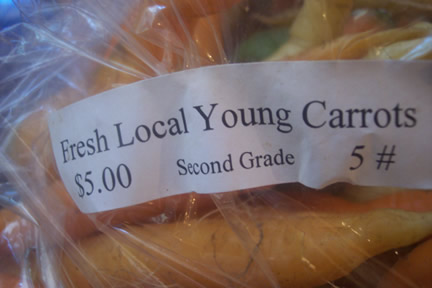
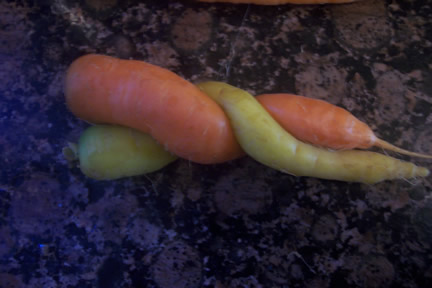
Yesterday, my first Saturday in years that I didn’t have to go to work at night, I decided to get up early and meet a few friends and former co-workers at the East Van Farmer’s Market. Ashamedly, my first visit, as many of the farmers there had been supplying me for years, forgoing my need to go down myself on a Saturday. The sun was shining, a beautiful warm September morning, and as I stopped in and took a look around I spotted Gabriel and Katie from Sapo Bravo, said a quick hello and promised to return shortly. After meeting up with my pastry crew, we made the rounds. First stop: Milan; picked up some tomatoes large and small, Walla Walla onions, beans, grapes. Next: Susan from Glorious Organics and the Organic Farm Connection; a bag of assorted coloured carrots. Back to Gabriel; the last of the peaches for the year, some green and purple basil, some plums. Over to Stein Mountain: peppers, mixed colours. By this time, my bags were heavy and after a nice visit with the girls I made my way home, arms bursting with produce.

Once home, a full assessment of the lot: the carrots were delicious and sweet, a shame to cook them; the bag of Sungolds bursting with sugar as well. Sounding like a salad, I thought, with some of the peppers, fantastic! The basil was amazingly fragrant, the perfume filling the kitchen. Definitely for the dressing. Peaches were perfectly ripe, something for dessert, maybe a Tarte Tatin, I figured I’d ponder it for a while.

A trip to the butcher with my 13 year old provided some conversation and planning.
The requests:

Foccacia: (Great, I can put Walla Walla onion and basil on top, and I won’t have to make a starch)

Crumble: using the peaches. Tarte tatin maybe, I suggest, but am convinced the crumble will be less work.

Main Course: let’s see, pork perhaps, the suggestion being mustard and bread crumbs on top.

A look at the counter and a beautiful rack of pork was spied, about 5 pounds. Perfect for the barbecue. Meat in hand, back home we went to peruse the cupboards for some inspiration.

Deciding to barbecue put the bread crumbs out the window, so I looked on my shelf of condiments to see what was there to make a marinade. Raspberry vinegar and hazelnut oil sounded like a good start. I needed some sweetness and spied a bottle of agave syrup a friend had given me. Made from the cactus that is used to make tequila, it has an interesting flavour and is quite sweet. I needed a bit of spice, and saw the tin of Old Bay Seasoning I had brought back from Baltimore. (For those of you unfamiliar, it’s a combination of celery salt, mustard, red pepper, black pepper, bay leaves, clove, allspice, ginger, mace, cardamom, cinnamon, and paprika). Just a shot to give it a kick. a bit of Dijon was added to the mix, all was whisked together and rubbed into the pork rack, then off to exile in the fridge.

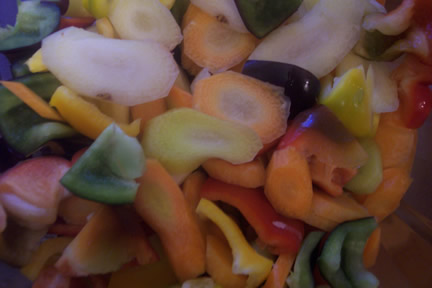
I set about to prepare the foccacia dough, assembled it in the Kitchen Aid and set it aside to proof. I turned to the carrots (who had been fooling around unsupervised) and peppers, peeled and cut them for the salad, and gave the sungolds a rinse. I popped outside and spotted some small ripe cherry tomatoes in the garden and picked them to add to the salad. A few more windfall apples under the tree were gathered and decided upon for a sauce to go with the pork, along with some very ripe Italian Prune plums.

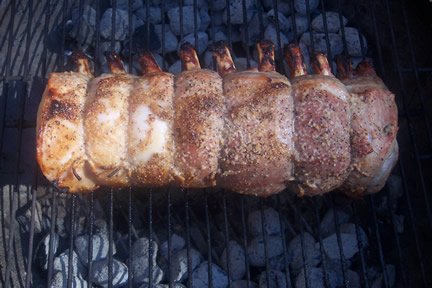
Then for the barbecue: When it comes to cooking over flame, I am decidedly still in the stone age. There is really only one piece of equipment that does a joint of meat over 5 pounds justice, and that is a very well conditioned Weber kettle barbecue. Loaded with real lump charcoal, (about 6 pounds for a pork rack this size), the coals were lit in anticipation. Once white hot, I arranged the coals on either side, providing a trench in the middle for the pork to drip without flaring up and bursting into flame, as well as heating the sides of the kettle, creating an oven environment once the lid was down.

Back into the kitchen, where the pork was removed from the marinade, seasoned well with coarse salt and steak spice and carried out to its new home on the grill. I reserved the marinade, put it in a small bowl with a brush for basting, and returned to attend to the bread. I punched the dough down for the first time, after which I sliced thinly one of the onions, and sauteed it in olive oil until golden, and set it aside to top the foccacia later.

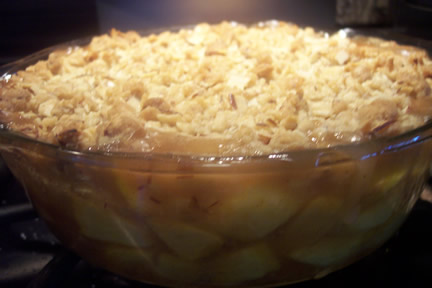
Bread well looked after, I turned my attention to dessert. A pot of water was put on the stove to blanch the peaches, and while it heated I prepared the topping. Butter, brown sugar, flour and almonds were quickly combined to make a crumbly mixture, and then peaches were blanched, pitted, diced, tossed with sugar, spices and a touch of cornstarch to absorb the liquid, and placed in a casserole dish. A scattering of the topping was administered and the oven turned on to preheat. A quick trip outside to baste the pork, by which time the oven was ready, the crumble safely inside, and my efforts turned to shaping the foccacia.

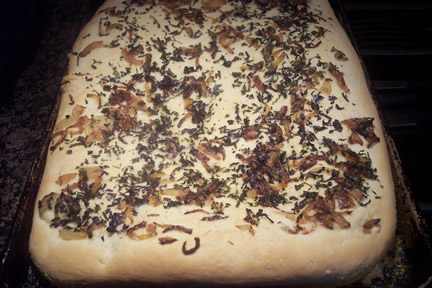
I lightly floured my large cutting board, punched down the dough, and rolled it out into a rectangle the same size as my baking sheet. A quick burst of nonstick spray and a scatter of cornmeal to provide a nice crust, the dough was laid out, tucked into the corners, and lightly covered for its final rise. I chopped some of the basil, set some aside for the bread, and turned the rest into a vinaigrette for the salad with some red wine vinegar, olive oil, honey, and garlic.

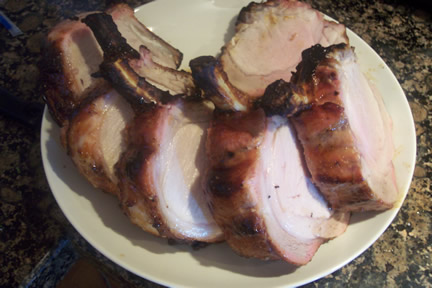
One more trip outside to check the pork, another baste, and at this point I checked the temperature. It was only registering 120 degrees, so I figured I had 20 minutes or so more before it should come off. Back inside, the crumble was ready, so out it came, and the foccacia was risen nicely. A top dressing of the caramelized onion, including the olive oil it was sauteed in, plus a scatter of basil and coarse salt, and into the oven she went. My final task completed, I grabbed a cold beer and headed outside to keep the pork company on its final lap. Once it reached its correct temperature (140 F before resting, it comes out nice and juicy and just a touch pink) I removed it form the Weber, set it on a rack to rest and relaxed for 15 minutes.

We both made our way back in to the house, took the foccacia out of the oven, and all that was left to do was a toss of the salad with the dressing and to slice the meat and bread. That accomplished, we tucked in for a terrific summer meal, full of flavour, texture, and satisfaction.

I wonder what I’ll do next weekend?

There and back again- from inquisitive cook to “green” chef – part 1

As long as I can remember, I’ve always been interested in food and cooking. We travelled quite a bit as kids, living in Africa when I was very young, back to northern BC, then off to Ontario, back to BC, off to England, then back to BC for good in 1977. I was 8, and settling in West Point Grey was a good place to be a kid. We spent a lot of time in the endowment lands and at Jericho Beach, exploring our surroundings as we always had. We lived in a big house on 13th, and between my older brother and I (who are only a year a part, so had the same circle of acquaintances) there was always a good sized group of boys around the house. One Sunday morning there was a fair group that had spent the night and we were poking around in the kitchen figuring out what to eat. Catholic school had taught us well, as Shrove Tuesday had just passed and the grade 6 class had learned in their discussions of the traditions of Mardi Gras how to make crepes. A crude batter was prepared in the blender, cooked in a couple of cast iron frying pans, and the group was satisfied, not just with the offerings, but the satisfaction of cooking for ourselves.

Every year, we had a family tradition of a pre-school year meeting in which the daily chores would be decided and assigned to my brothers and I. That September, (1979 I guess), I decided that I would like to relinquish my duties as garbageman, and would take on the responsibility of preparing breakfast for the family on a daily basis. Armed with my well worn copy of “the Joy Of Cooking,” I set out to liberate the Green boys of years of porridge for breakfast. Pancakes, omelettes, different egg preparations all became part of the repertoire, and I held my post for the rest of my time at home.

My parents had always been interested in social and environmental issues, so in 1980, following skyrocketing interest rates and house prices, my parents decided that my Dad had had enough of corporate life, and my Mom would work instead, taking a position with the Development agency of the Catholic Church. This meant a fairly substantial income drop, so we moved to South Vancouver, and spent the remainder of my youth living on the East Side.

The 80’s were pretty tumultuous times for those involved in social justice and global awareness, so we became very aware of socio-economic issues, the reality of the global food supply, and the like. In 1985, my parents packed the family up in a 1969 Volkswagen van and drove to Nicaragua, so that they could work with a group of priests who had been working with the Mayan people in Guatemala, and were now in exile in San Juan Del Sur, a beautiful beach town near the Costa Rican border. What a place to be 16! As the revolution was merely 6 years old, the youth were the future and as such were treated like adults. It was common for the high school classes to encompass a demographic of 15-30, and the atmosphere was of excitement and exhilaration. We were there for half the year, during which time we were able to discover exciting new flavours, and really learned an appreciation for ingredients. There was a trade embargo from the US because of the socialist regime, and we learned to cherish the fresh produce and seafood at the market, the fresh pork that was available, and most importantly, we learned like most of the world how to make beans and rice the backbone of the diet. Returning to Vancouver 8 months later, to say we had a new appreciation for the standard of living afforded the average Canadian would be an understatement to say the least.

A couple of years later, as I was finishing High School, I started looking at finding a part time job. A local restaurant near my high school had placed an ad in the morning announcements for part time kitchen help, and I figure since I loved to cook it might be a good thing to try out for a while. I stopped by the Avenue Grill on my way home from school one day, had a brief talk with the Sous Chef, and left my name and number. I got a call from the Chef a few days later and met with her, and started doing prep and making toast on Easter weekend, 1987.

I worked Friday nights and Sunday mornings for the rest of the school year, and learned the basics. The Grill was at that time doing a real California Cuisine thing, all the food was prepared in house, fresh baked muffins and scones, fresh creative salads and sandwiches, and a small dinner menu with pasta and casual but well prepared entrees. Sunday brunch was one of the busiest in town, where it wasn’t uncommon to do 120-150 covers in 4 hours, OUT OF 38 SEATS!! By the time the school year ended, I had been offered full time work for the summer, which I accepted gladly. (At that time I was certain that I was destined to be a rock star, so I just had to make a few bucks to get me through in the meantime).

A few months after I started full time, an apprenticeship became available and was offered, provided I could commit to sticking around for a couple of years to learn the trade. Again, I gladly accepted, and went from prep to sandwiches and salads, to working dinner service within the first year. By the end of my first full year, I was cooking Sunday brunch every week as well as 2 nights on the stove and 2 on the salad station. By the time the second year rolled around, the Sous Chef had left, and it became my responsibility to cook dinner four nights a week and Sunday Brunch. I was happy to accept the challenge, and excited to be able to write specials, learn new techniques, and grow into a larger role. In the fall of 1989, the Chef decided to leave, and at that time, the responsibility to take over the kitchen fell on my shoulders.

The fall of 1989 and spring of 1990 brought great change for me. I had just gotten married the summer before, I had taken on the responsibility of running a small restaurant kitchen, and we had decided to buy our first house. The housing market had gone through the roof, and the only place we could afford was to move to the Fraser Valley. We started looking in Delta and Surrey, and as we looked, prices kept getting higher and higher, pushing us farther and farther east, until we finally bought a small home in Aldergrove, a good hour’s drive from work, in February, 1990. Within a few weeks of the house purchase, Jim, the owner of the restaurant came to me and said he had an idea to do something no one else in town was doing. He really wanted to get into organic food and embracing the natural food movement that had been going on in California. I was sent out to buy a few books and do some research (pre-internet, it meant the library) and picked up a copy of Chez Panisse Cooking, written by then Chef Paul Bertolli. I was fascinated by the story and the concept, and inspired to accept that thought process as the only way to cook. Between my own personal social background and a new move to start a family in the middle of farm country, everything seemed to make sense to go in a real down to earth, “connected with the land” direction. I had a copy of the Canadian Organic Food directory that had been picked up at Kits Natural Foods, and thumbed through it to see who was active in British Columbia. I only knew one organic farmer, Herb Barbolet from Glorious Garnish, and decided to ask him how I could get in touch with other farms, and the BCARA, the local organic farmer’s association. His response was, “You’re in touch. I’m the president. You should come to our meetings in Cloverdale once a month and meet some great people.” I agreed, and in the meantime, he gave me the number of a family in Surrey who had been farming there for a half dozen years.

End part 1. Next: part 2, meeting the Kings